
Last updated November 23, 2026
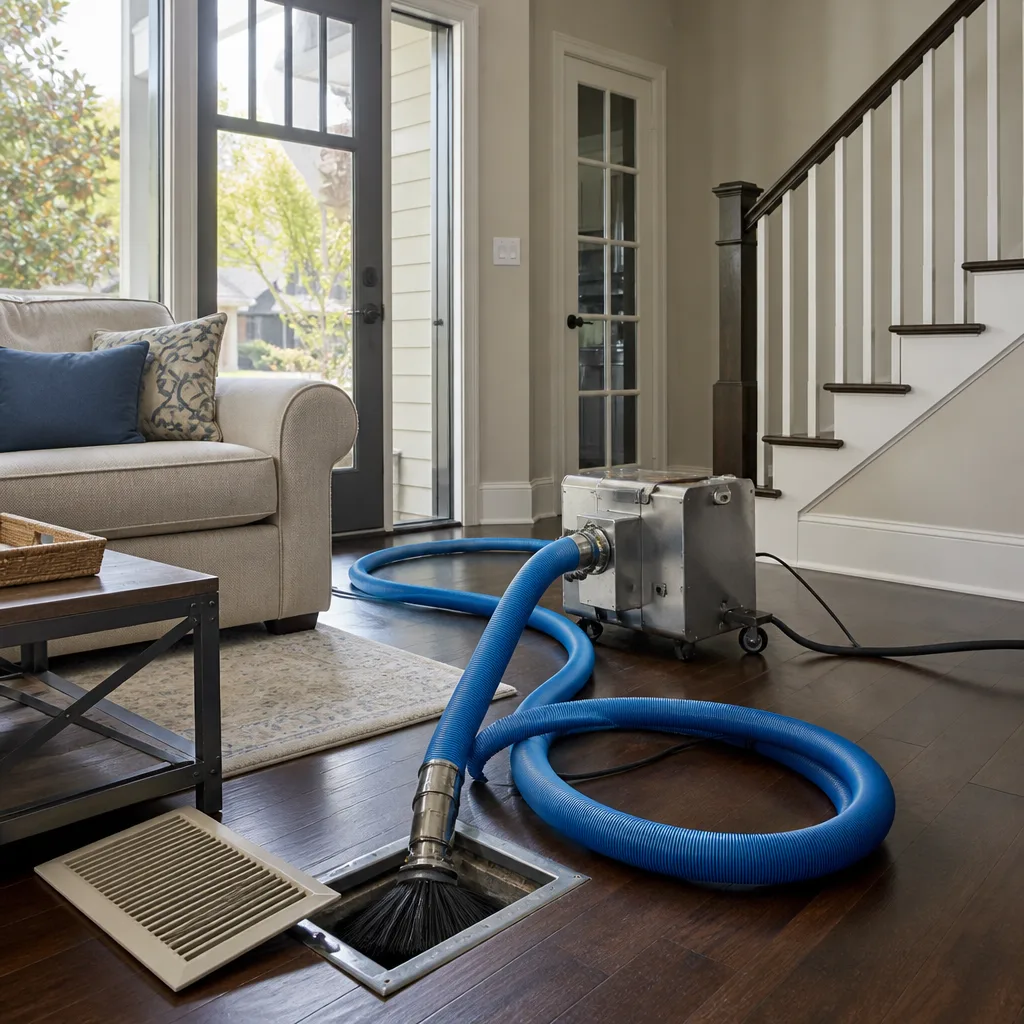 Whole-home duct cleaning
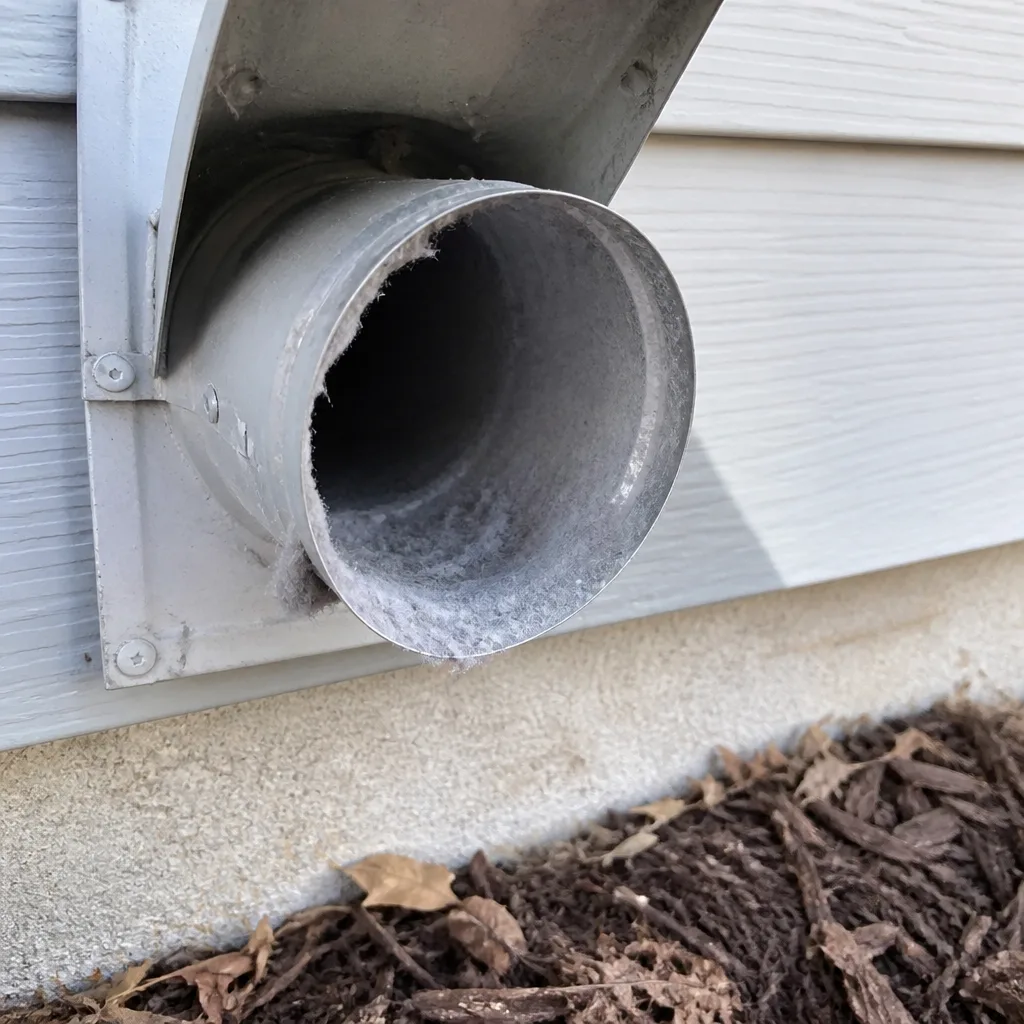 Dryer vent cleaning
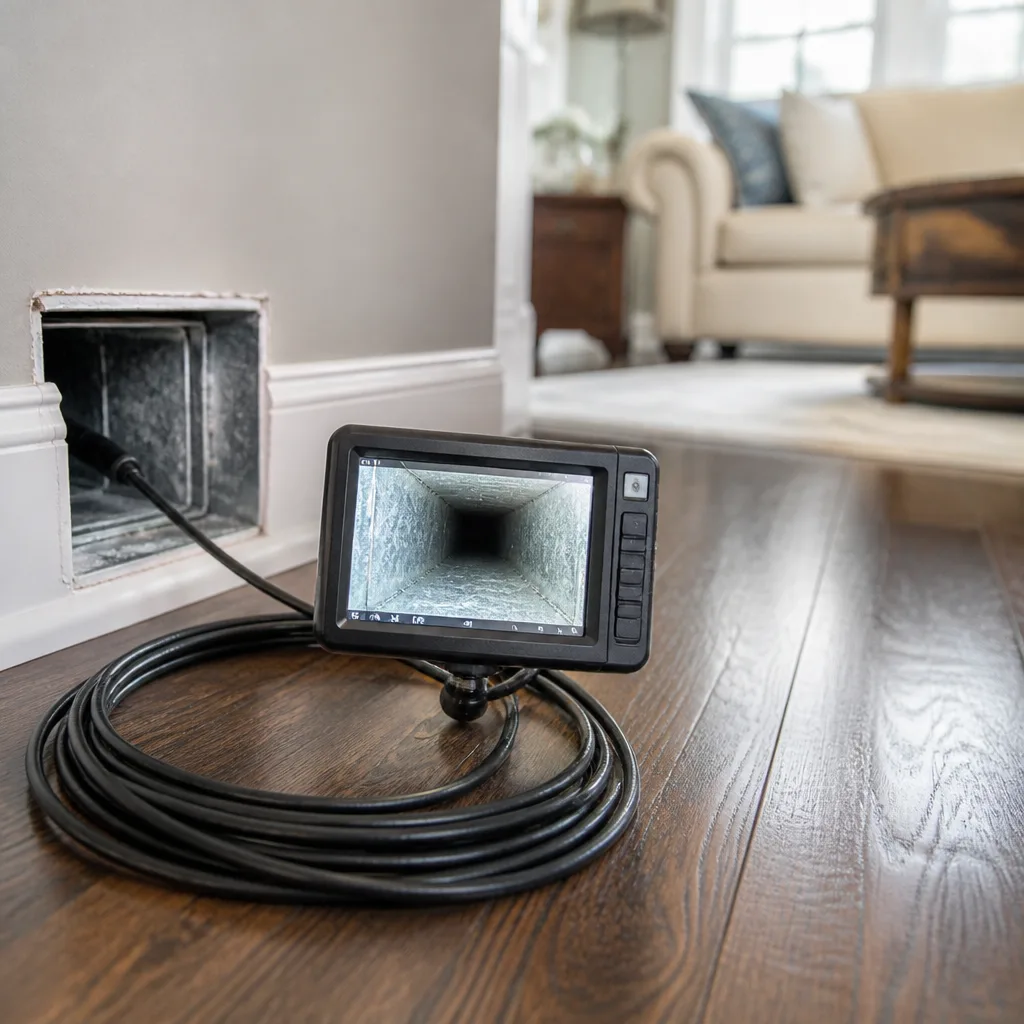 Camera inspection
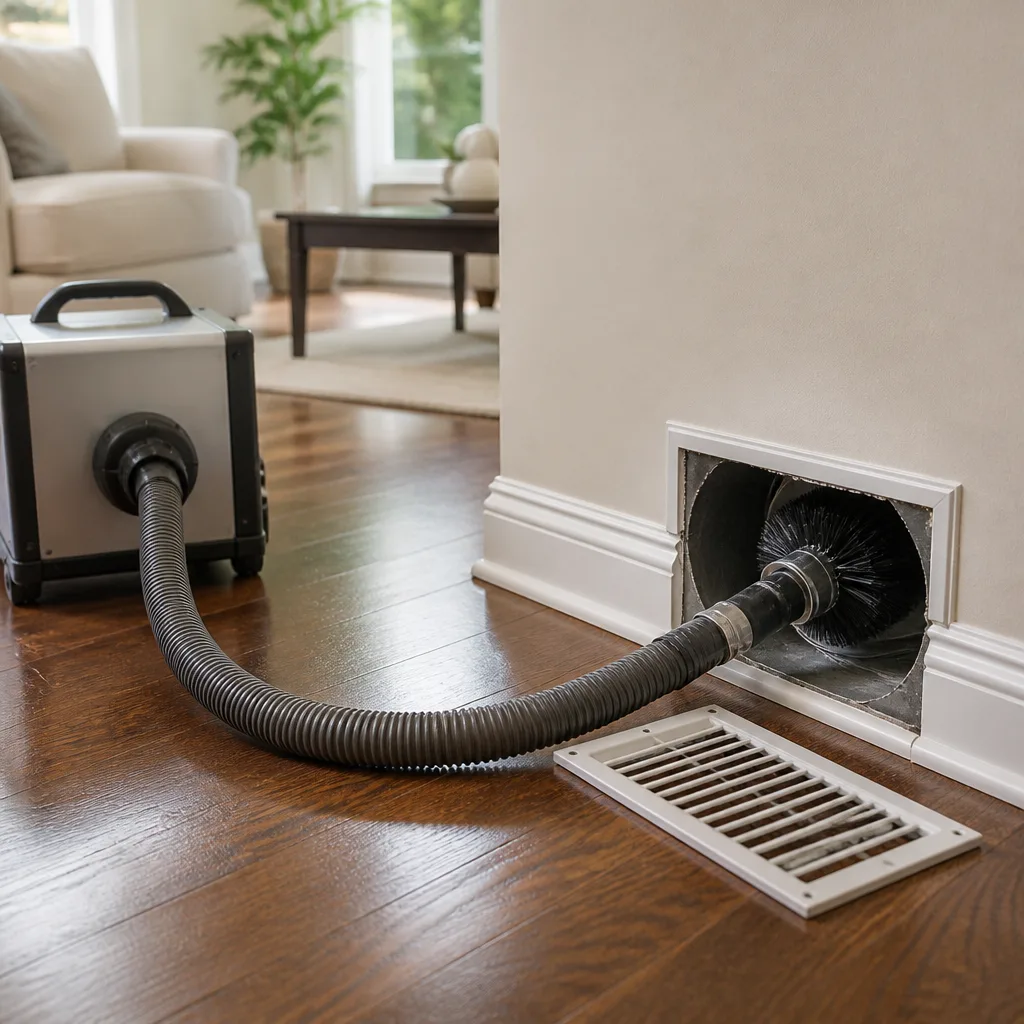 Sanitizing & deodorizing
Whole-system duct and dryer vent check with before-and-after photos - you see exactly what came out of your vents
That "$99 whole-house special" is a bait ad - the real number appears once they are in your hallway, or the "clean" is a shop-vac at the register. We photograph the inside of your ducts before and after instead.
Choosing the Right Air Duct Cleaning Brand: A Buyer’s Guide for Boulder
Here’s the part almost nobody tells you: there is no national brand in air duct cleaning the way there is in pest control or moving. The industry is made up almost entirely of regional independents and local franchise operators, which means a Boulder homeowner isn’t really choosing between brands at all. You’re choosing between operators. That changes everything about how you evaluate a quote, because the logo on the van tells you almost nothing about the equipment in the driveway or the process behind it. This guide reframes the whole buying decision around the technical benchmarks that actually predict whether a cleaning will do anything: equipment class, containment, service scope, and documentation. By the end you’ll know exactly what to ask before you let anyone near your ducts in Boulder.
Quick Answer
The right air duct cleaning company in Boulder is the one that brings professional-grade truck-mounted or high-CFM portable equipment with HEPA filtration, uses containment and negative air during service, and can clean, sanitize, repair, and seal the full system rather than just vacuuming visible registers. Brand name matters far less than equipment class, verified NADCA membership, and whether the company hands you before-and-after documentation. Ask those four things and you’ll separate serious operators from $99 coupon operations in about five minutes.
Styles & brands we work with
- Whole-home duct cleaning
- Dryer vent cleaning
- Camera inspection
- Sanitizing & deodorizing
Table of Contents
- Why There’s No Dominant Air Duct Cleaning Brand in Boulder
- NADCA Membership: The Closest Thing to a Real Quality Signal
- The Equipment Question That Matters More Than Any Brand Name
- Local Independent vs. National Franchise in Boulder
- What “Full-System” Capability Actually Means in Equipment Terms
- Before-and-After Documentation: The Accountability Test
- How to Evaluate a Quote Line by Line
- Why Boulder’s Climate and Housing Make Equipment Choice Matter More
Why There’s No Dominant Air Duct Cleaning Brand in Boulder
Compare duct cleaning to pest control. In pest control you can name three or four national brands off the top of your head, and their reputations are built on standardized processes and franchise training programs. Duct cleaning never consolidated that way. It’s fragmented, dominated by local operators who buy their own equipment and build their own process, plus a handful of franchises that mostly function as marketing and lead-generation networks for local owner-operators. That distinction matters because a recognizable franchise name doesn’t guarantee better work. It guarantees a more consistent sales script.
In Boulder specifically, this fragmentation is pronounced. Between the university-adjacent rentals, the older bungalows in the Mapleton Hill and Whittier neighborhoods, and the newer energy-conscious builds out toward Gunbarrel and the foothills, you have a housing stock that spans a century of ductwork design. A company that cleans nothing but modern flex duct in subdivisions may not have the equipment or technique for the sheet metal runs and legacy return systems common in Boulder’s older homes. And a company that markets hard but arrives with a shop vacuum and a brush is a company that padded its margin at your expense.
So the framework shifts. Instead of asking “which brand is best,” ask:
- What equipment class does this operator own, and who makes it?
- Can they handle the duct type in my home, not just a generic home?
- What’s their process from arrival to cleanup to documentation?
- What happens if they find damage or leakage mid-job?
Those four questions expose more than a logo ever will. This is the heart of how we think about the trade at Boulder Air Duct Cleaning Pros, and it’s what the rest of this guide unpacks.
NADCA Membership: The Closest Thing to a Real Quality Signal
The National Air Duct Cleaners Association (NADCA) is the trade’s standards body, and its membership is the closest thing this industry has to a meaningful credential. NADCA publishes the ACR, the Assessment, Cleaning, and Restoration standard that serious operators follow, and its members commit to that standard’s methodology. It’s not a government license, and it’s not a guarantee of good work. But a current NADCA member has at least passed through a bar that most $99-per-system operators never bother with.
The key word is “verify.” Any company can print a logo on a website or a mailer. Here’s how to actually check:
- Ask for the company’s NADCA member number or the name it’s registered under, then look it up in NADCA’s online member directory yourself.
- Confirm the membership is active, not lapsed. Directories list current members.
- Ask whether the individual technicians are ASCS (Air Systems Cleaning Specialist) certified, not just the company.
- Ask whether the crew uses the six-step source removal method the ACR standard requires: source removal of contaminants, not just surface vacuuming.
In our experience, a company that can answer those four questions without fumbling is a company that has thought seriously about process. A company that deflects with “we’re fully licensed and insured, don’t worry about it” is telling you something too. Boulder has a well-educated population, and the better local operators are used to being asked this and have the answer ready.
The Equipment Question That Matters More Than Any Brand Name
Here’s the technical core of the whole buying decision. For any air duct cleaning to remove contaminants rather than redistribute them, it needs three things: negative pressure on the system while work is happening, a high-volume vacuum pulling airborne debris out of the system into a HEPA-rated collection chamber, and an agitation tool that reaches the duct surfaces. Skip any one and you’ll get a partial cleaning at best, a net-negative result at worst, because the vacuum drags dust through the house if there’s no negative pressure containing it.
The equipment people put their names on tells you how seriously they take this. In Boulder, as everywhere, the two dominant air duct cleaning equipment manufacturers are Rotobrush and Nikro. Both build purpose-made duct cleaning systems: high-velocity agitation tools running on flexible shafts, connected to HEPA-filtration vacuum units that trap what comes out of the ducts rather than blowing it back into the room. Knowing which one a company uses, and how they configure it (truck-mount vs. portable, and the CFM rating of the vacuum it’s paired with) gets you further than comparing marketing copy.
What to ask:
- Is the vacuum truck-mounted or portable? Truck-mounts typically deliver much higher volume; portables vary widely. Ask for the CFM figure, and don’t let them sidestep it with “it’s commercial grade.”
- Is the collection HEPA-rated? Anything less and you’re breathing what comes out of the exhaust.
- Do they use containment and negative air? Look for a company that brings HEPA air scrubbers and negative air machines into the home during work. Abatement Technologies builds the standard equipment for this kind of containment, and a company that uses it is treating your home the way a remediation crew treats a contaminated space, which is the level of rigor the job actually deserves.
- What surface protection? Floor coverings and corner protection are standard on a professional visit. A company that protects the home with Guardsman-grade coverings isn’t improvising.
That last detail tells you almost everything. If a company shows up with bed sheets over your furniture and a shop vacuum they bought at a box store, the equipment class is the equipment class. No brand name on the quote changes that.
Local Independent vs. National Franchise in Boulder
Neither model wins outright. They fail differently and succeed differently, and knowing which pattern you’re dealing with helps.
Local independents usually win on equipment. Because they own it and depend on it daily, they tend to invest in the higher-end Rotobrush or Nikro systems and take the time to master them. They’re also more flexible: they can inspect a compromised duct run, run a camera, repair a joint, seal a leak, and finish with a sanitizing step in one visit, because they’ve built their whole process around the full system rather than one service. What they sometimes lack is the polish of a national franchise’s documentation or standardized reporting, though the better ones have closed that gap.
National franchises usually win on process consistency. The corporate playbook provides checklists, standardized reports, and franchisor training, which means a franchise operation in Boulder is likely to follow a predictable process. The downside: the franchisee may be new to the trade, may not own the top-tier equipment, and may push add-ons your home doesn’t need.
How to tell them apart in practice:
- Ask who owns the equipment. The operator who owns the truck-mount and the HEPA vacuum is the operator who cares about it.
- Ask what happens if they find a broken duct run or failed seal. A local independent can repair and seal it. A franchise that doesn’t do repair has to hand you three days of down time and another contractor.
- Ask for the crew’s actual process from arrival to departure. A confident local operator will describe it step by step. A franchise that reads from the manual may stumble on the details of your specific home.
What you shouldn’t do is pick on branding alone. A recognizable franchise logo in Boulder is a marketing decision, not a technical one. Judge on equipment, scope, and documentation regardless of whose logo you see.
What “Full-System” Capability Actually Means in Equipment Terms
“Full-system” is a phrase that gets thrown around in Boulder marketing, and it’s worth translating to concrete capability. A company that can truly clean, sanitize, repair, and seal a duct system in one visit needs all of the following capability, not just the following services listed on a brochure:
- Cleaning: high-CFM vacuum with HEPA filtration, agitation tools sized to the ductwork, and a source-removal process on every run, not just the visible registers.
- Sanitizing: fogging or surface application equipment rated for duct interiors, and sanitizers registered for the use. A company that cleans but can’t sanitize will leave the biology in place after removing the visible debris.
- Repair: sheet metal or flexible duct repair capability, including replacement of failed joints, disconnected runs, and crushed sections. This is where the actual air loss lives in most Boulder homes.
- Sealing: mastic or aeroseal-style interior sealing that closes the leaks and gaps the cleaning exposed. Cleaning a leaky system without sealing it is like pressure-washing a leaky roof.
Companies that sub out repair or skip sealing entirely are selling you a step, not a system. In our experience the single most valuable addition to a duct cleaning isn’t a stronger vacuum. It’s the sealing that follows it. Doing repairing and sealing on the same visit also means one set of protective coverings, one containment setup, and one crew accountable for the whole result rather than three.
If the system also feeds an HVAC unit, a company that can clean the air handler, evaporator coil, and blower as part of the same job has an advantage. Contaminants that live in the handler come back through the ducts. Cleaning only one side of that equation is another partial job. This is where HVAC cleaning as a service line earns its keep.
Before-and-After Documentation: The Accountability Test
If you only ask one question at the quote stage, make it this: what will you hand me when you’re done? A company that provides before-and-after documentation is a company that knows it’ll be judged on the result. A company that answers “you’ll smell the difference” or “trust us, it looks great in there” is asking you to take their word for it with no recourse.
Documentation worth asking for in Boulder:
- Photos of the before and after on each major run, at the register and at the plenum where accessible.
- Video inspection footage of the interior of the ductwork, which the better operators use routinely and can show you.
- Vacuum pressure or airflow readings taken before and after cleaning, showing whether the work made a measurable difference to system pressure and airflow. This is the closest thing to an objective performance metric the industry has.
- A written summary of findings: what was cleaned, what was found, what was repaired or sealed, and what still needs attention.
Documentation is the answer to the industry’s trust problem. The pattern many homeowners fear (a low advertised price that grows once the crew is in the house) is only possible because nobody documents what was actually done. Companies that document the work, photograph the interior, and hand over pressure readings can’t hide behind surprise add-ons. Companies that don’t are banking on you not asking. Ask any company you consider whether they will hand you this documentation on completion, and treat a vague answer as your answer.
Photo and video evidence also settles the biggest question of all: did anything actually happen? When Boulder customers take “before and after photos” off our service, that habit comes from how we were trained to work, not from a marketing script. One flat price per system is agreed in writing before the work begins, per our operator policy. No per-vent pricing. No surprise line items after the fact. That’s a standard any honest operator should be willing to sign their name to.
How to Evaluate a Quote Line by Line
Read the quote the way you’d read a wiring diagram. What’s actually itemized, what’s vague, and what’s suspiciously cheap?
- Check whether the price is per-system or per-vent. Per-system pricing (one flat price for the whole system) is what a professional operator should quote after an inspection of the actual layout. Per-vent pricing is a warning sign: it lets the company pad the vent count after they’ve arrived.
- Check what “cleaning” includes. Does it include the main supply and return trunks, or just the register boots? Does it include the air handler? Is the system sanitized, or is that an add-on?
- Check whether repair and sealing are on the quote. If the company can’t handle repair or sealing, the “cleaning” is incomplete by design.
- Check the equipment list. Look for the specific vacuum and containment equipment brands. Rotobrush. Nikro. Abatement Technologies. Guardsman protection. If the quote says “professional equipment” and nothing else, that’s a question, not an answer.
- Check the printed exclusion list. Legitimate exclusions belong on the quote (the company can’t repair a disconnected flex run they didn’t see, for example). Vague exclusions about “conditions found” belong on a red flag list.
- Ask for a free estimate appointment. A company willing to walk the system and price the job on site is a company committed to a real number, not a number designed to get a foot in the door.
On price itself: expect the quote to reflect the scope you’ve just verified. Companies that quote the same $99 no matter what your system looks like have not looked at your system. That’s the whole point. The written estimate is the final price. Insist on it.
Why Boulder’s Climate and Housing Make Equipment Choice Matter More
Boulder’s climate is dry, windy, and heavily seasonal. The spring and fall wind events blow fine particulate into the house through every leak in the building envelope, and the heating season runs a furnace system hard for months at a time. That combination pushes a lot of fine dust into return systems and filter housings, and it makes the containment step of a cleaning non-negotiable. A cleaning that runs dirty is worse than a cleaning that doesn’t happen, because you’re pulling years of settled dust back into the room you’re standing in.
The housing stock is the other half of the equation. Older homes in neighborhoods like Mapleton Hill, Whittier, and the streets around Chautauqua often have original or partially replaced ductwork, including sheet metal runs with seams that have loosened over decades of thermal cycling. Newer builds out toward Gunbarrel and in the subdivisions east of town tend toward flexible duct and tighter envelope design, which means different cleaning tools and different sealing needs. A one-size-fits-all shop vacuum and a brush can’t handle both. A properly equipped operator adjusts for the duct class in front of them.
Fire risk deserves a separate mention only in the context of dryer vents, but it belongs in the buyer’s evaluation. A clogged dryer vent is a fire risk waiting to be addressed, and any company doing duct cleaning that can also handle dryer vent cleaning under the same containment discipline is a company you can evaluate on both jobs at once. Ask what equipment they use on dryer vents separately from air ducts. The processes overlap but the tools don’t.
Common Mistakes to Avoid
- Choosing on price alone. The lowest quote in Boulder is almost always a loss-leader designed to get a crew into your home where upselling happens. Anchor your decision on equipment and scope, then compare prices.
- Skipping the NADCA check. A logo on a mailer is not a membership. Verify it in the directory yourself, and ask whether the technicians hold ASCS certification.
- Not asking about the vacuum. “HEPA” and “commercial grade” are not the same thing. Ask for the CFM rating and whether the collection is HEPA-rated or just a bag filter.
- Letting them clean without containment. If there’s no negative air setup before the agitation tools go in, dust will migrate. Ask what containment they use, and treat “we’re careful” as a non-answer.
- Accepting “cleaning” without sealing. A duct system with failed seams and loose joints will refill with dust. Full-system means clean, repair, and seal in one visit, or at least on the same job scope.
- Not getting the before-and-after package. Verbal reassurance is not documentation. Insist on photos of the interior of the runs before and after, plus pressure or airflow readings if the company has them.
- Overlooking the HVAC unit itself. Cleaning the ducts while leaving the air handler, blower, and coil contaminated means the dirt comes right back. Ask whether the handler is in scope, and if not, ask why. This is the case for air duct cleaning that covers the whole air path rather than just the register boots.
See the difference
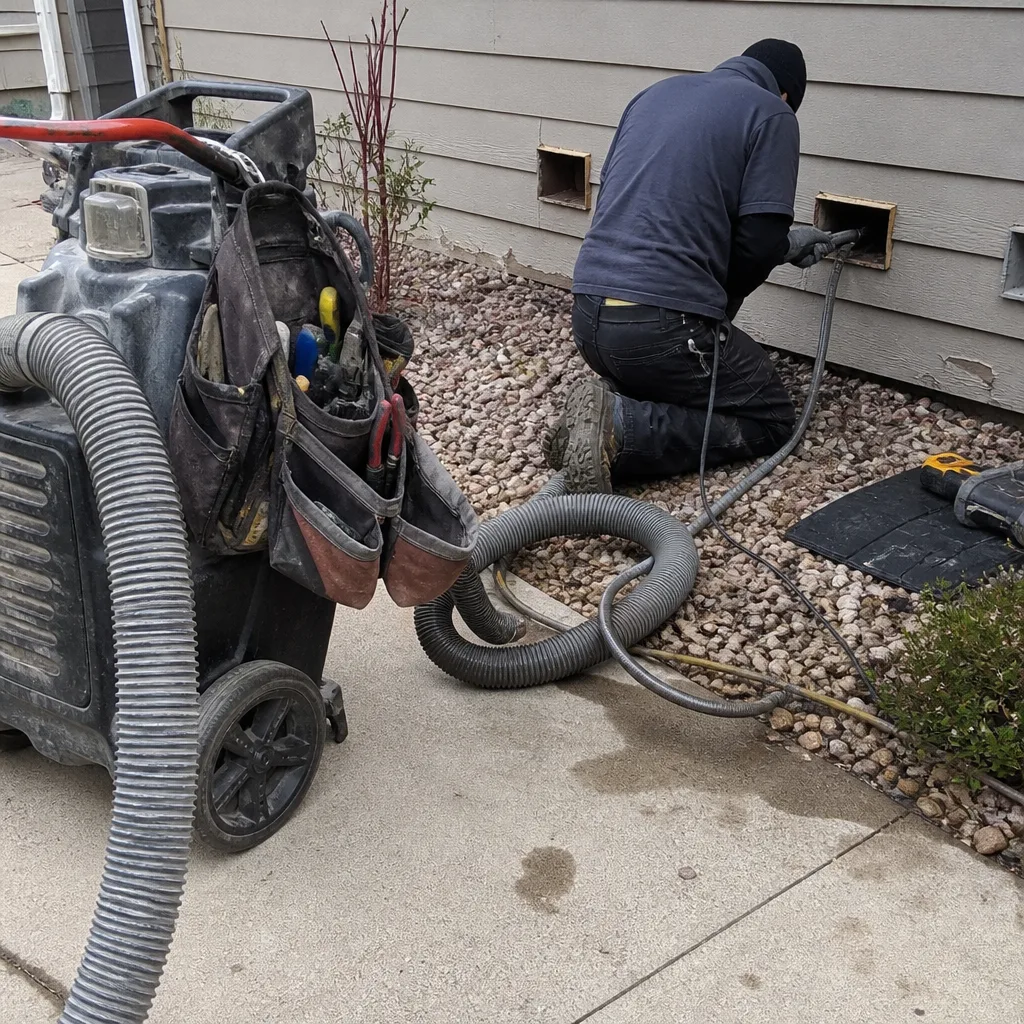 Before
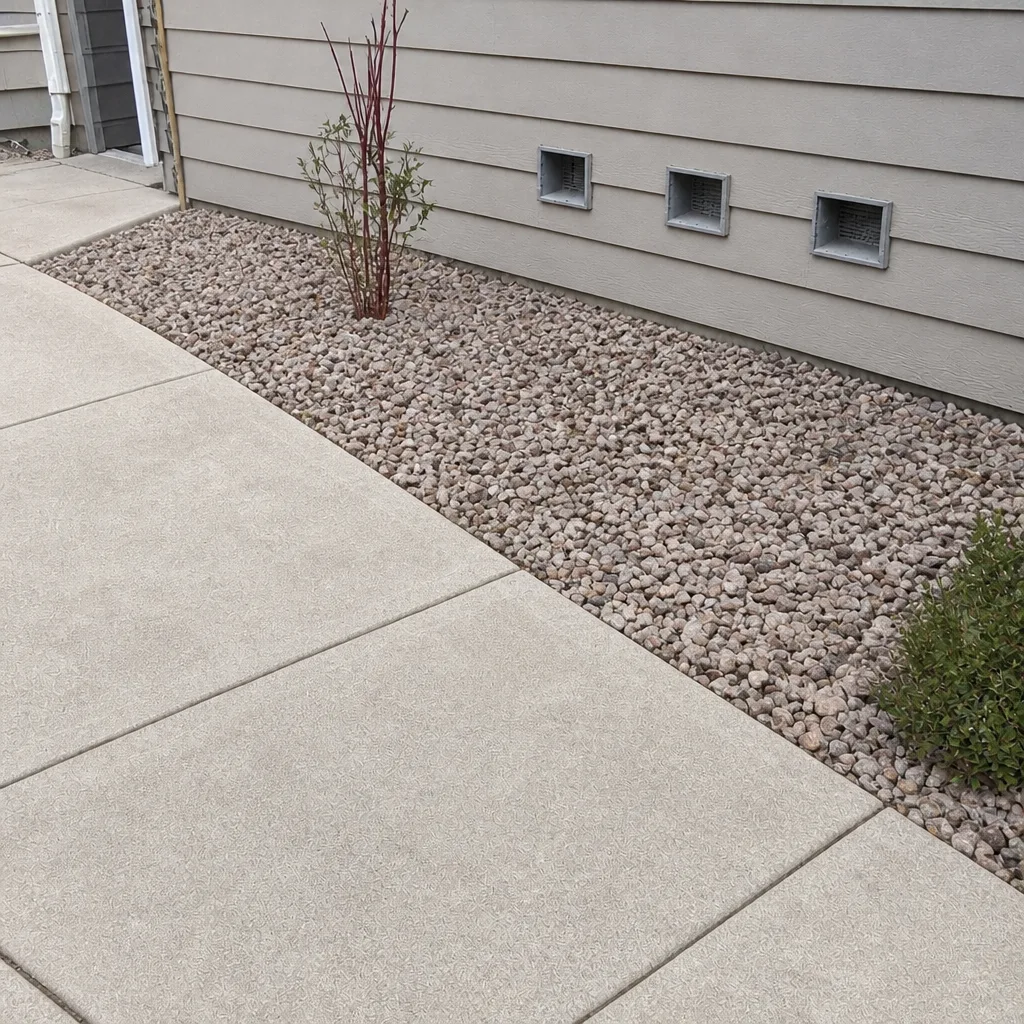 After
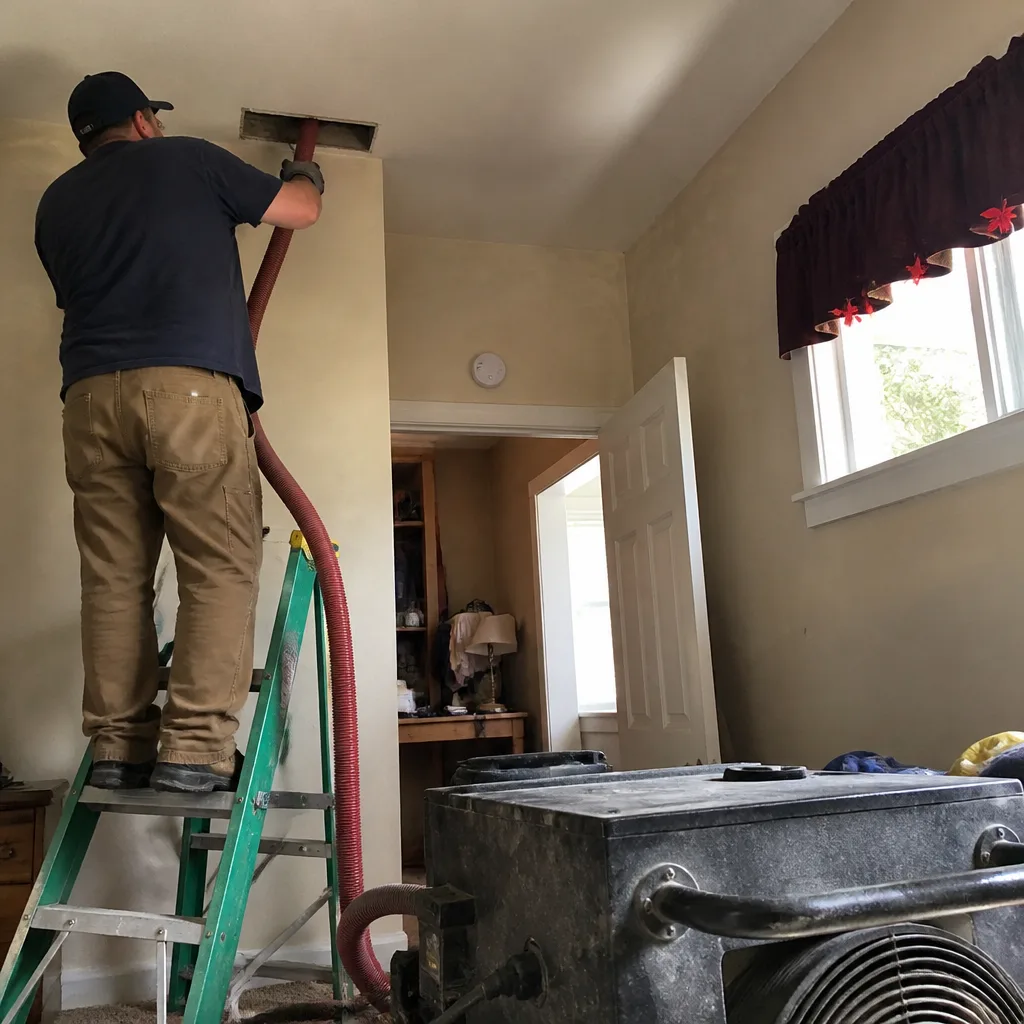 Before
 After
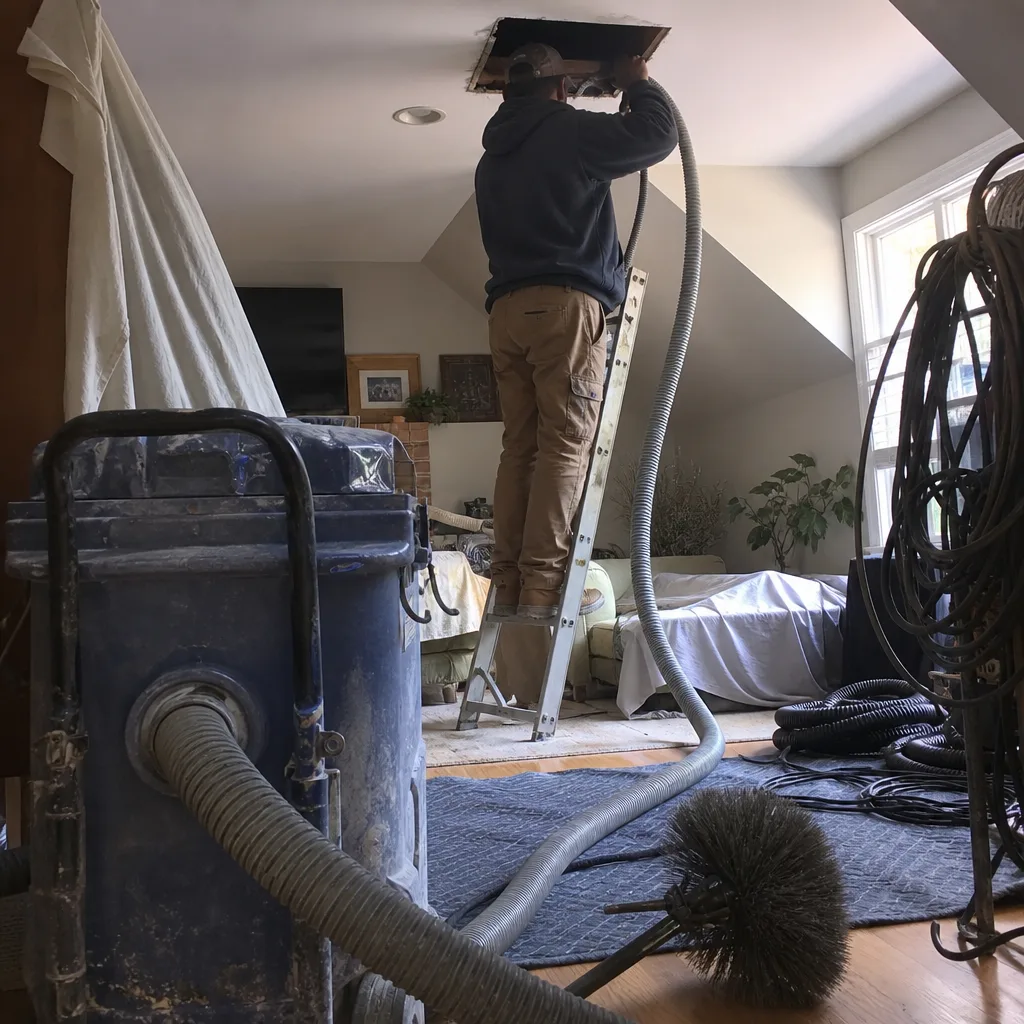 Before
 After
When to Call a Professional
Call a professional when you can see visible dust streaking from the registers, when a family member’s allergies or asthma symptoms get worse when the heat comes on, when you’ve just finished a remodel or bought a home in Boulder with unknown duct history, or when you can’t remember the last time the system was cleaned. Call when the airflow has dropped noticeably across multiple rooms, when the dryer takes two cycles to dry a load, or when you can see disconnected or crushed flexible duct in the basement or crawlspace. These aren’t handyman jobs. A proper cleaning needs negative pressure, HEPA-filtered vacuum, and the ability to inspect and repair the interior of the run. Boulder Air Duct Cleaning Pros offers free estimates in Boulder. Call (833) 554-4046 and we’ll book an assessment of your system and quote it on the scope, not on a guess.
Frequently Asked Questions
No. There’s no dominant national brand in air duct cleaning, so “best brand” isn’t a meaningful question. The meaningful questions are: what equipment does the company own, is it HEPA-rated with proper CFM, do they use containment, can they also repair and seal, and what documentation do they provide afterward. Any Boulder company that can answer those is worth considering regardless of the logo.
Look the company up in NADCA’s online member directory under the exact business name on the quote, and confirm the membership is current. Then ask whether individual technicians hold ASCS certification, not just the company. A company that can produce both is a company that has made a real commitment to the trade standard. A company that deflects or produces a logo image instead of a lookup is one to avoid.
You should expect a purpose-built duct cleaning system (Rotobrush and Nikro are the two industry-standard manufacturers), paired with a high-CFM HEPA-rated vacuum, and HEPA air scrubbers or negative air units used during the cleaning itself. Abatement Technologies is the standard equipment for containment and air scrubbing. Floor protection and corner protection are standard on any professional visit, and the better companies use Guardsman-grade coverings.
Truck-mounted vacuums typically deliver much higher air volume, which matters for a full-system cleaning, and they’re the benchmark serious operators aim for. But a high-end portable with proper HEPA filtration can clean effectively when the operator is skilled. Ask for the CFM rating and whether the collection is HEPA-rated. The number tells you more than the description.
Most homes can go several years between cleanings if the system is well sealed and the filter is changed regularly. In Boulder’s dry, windy climate, homes with pets, smokers, recent renovations, or known allergy triggers will benefit from more frequent cleaning. The honest answer is that it depends on the condition of the system, which is why a free estimate should include an inspection of the interior of the runs rather than a fixed schedule.
A full-system cleaning covers the ducts, the air handler, the blower, the evaporator coil, and the return plenum, plus sanitizing and any repair and sealing the inspection reveals. Duct cleaning alone often means the visible registers and main runs only. In our experience the full-system scope is what actually changes the air quality in the home. Ask what’s in scope before you compare prices, because the numbers aren’t comparable.
Yes, and it makes sense to do so when a company has the equipment and containment discipline for both. A clogged dryer vent is a fire risk worth taking seriously. Ask about the dryer vent separately from the ducts: the processes overlap but the tools and the safety considerations don’t. Any reputable operator should be able to walk you through both scopes and quote them together.
The Bottom Line
The company name on the van in Boulder matters far less than the equipment class behind it. Judge an operator on four things: verified NADCA membership (look it up yourself, don’t take the logo’s word), purpose-built equipment with a HEPA-rated vacuum and containment (Rotobrush, Nikro, Abatement Technologies are the names to know), the ability to clean, sanitize, repair, and seal in one visit (not four separate contractors), and documented before-and-after work with photos and pressure or airflow readings. A company that passes all four will deliver a cleaning that actually changes the air in your home. A company that fails even one of them is offering you a surface-level service with a professional-sounding label. Our technicians have up to 13 years of experience, and our process is built around that same standard. Free estimates are available. Call (833) 554-4046 to book an assessment. We answer 24/7. Fast dispatch from 7am to 7pm, Sunday through Friday.
Written by the team at Boulder Air Duct Cleaning Pros.