
Last updated November 23, 2026
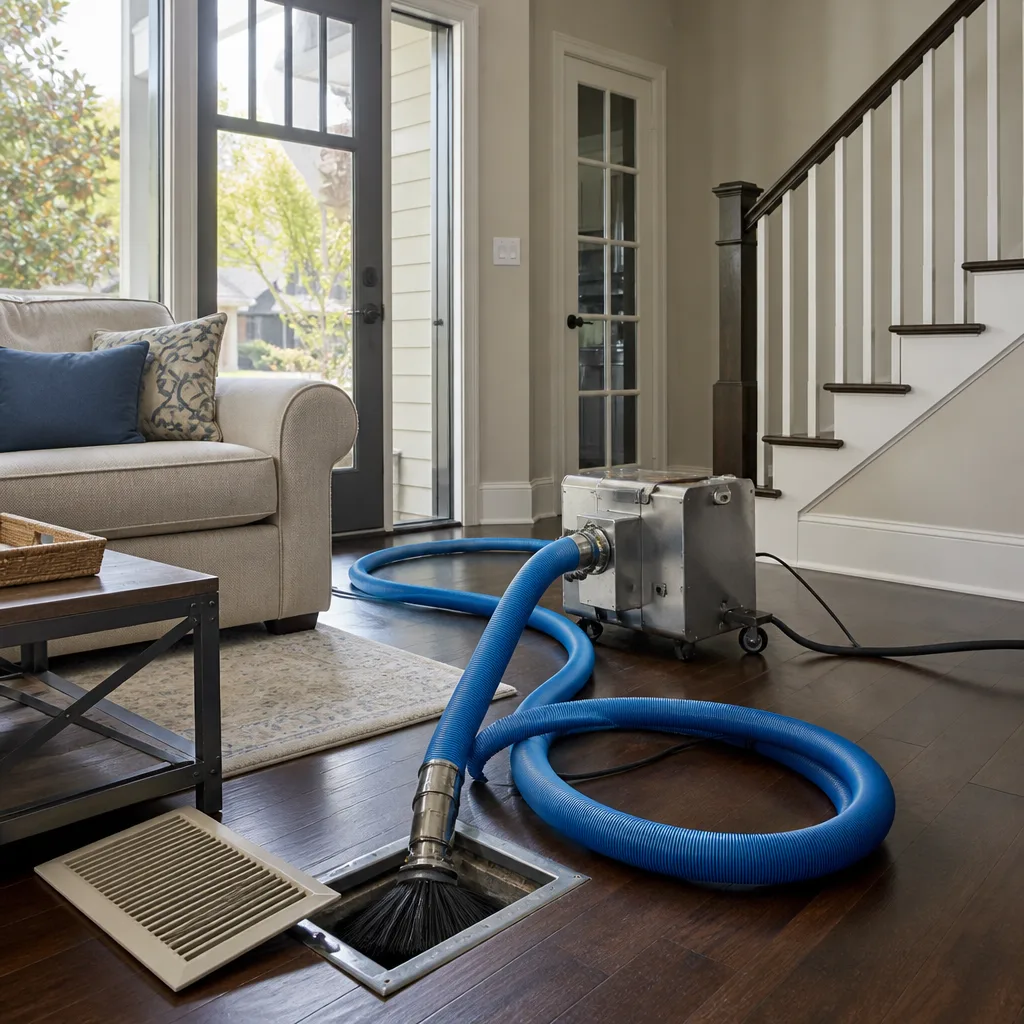 Whole-home duct cleaning
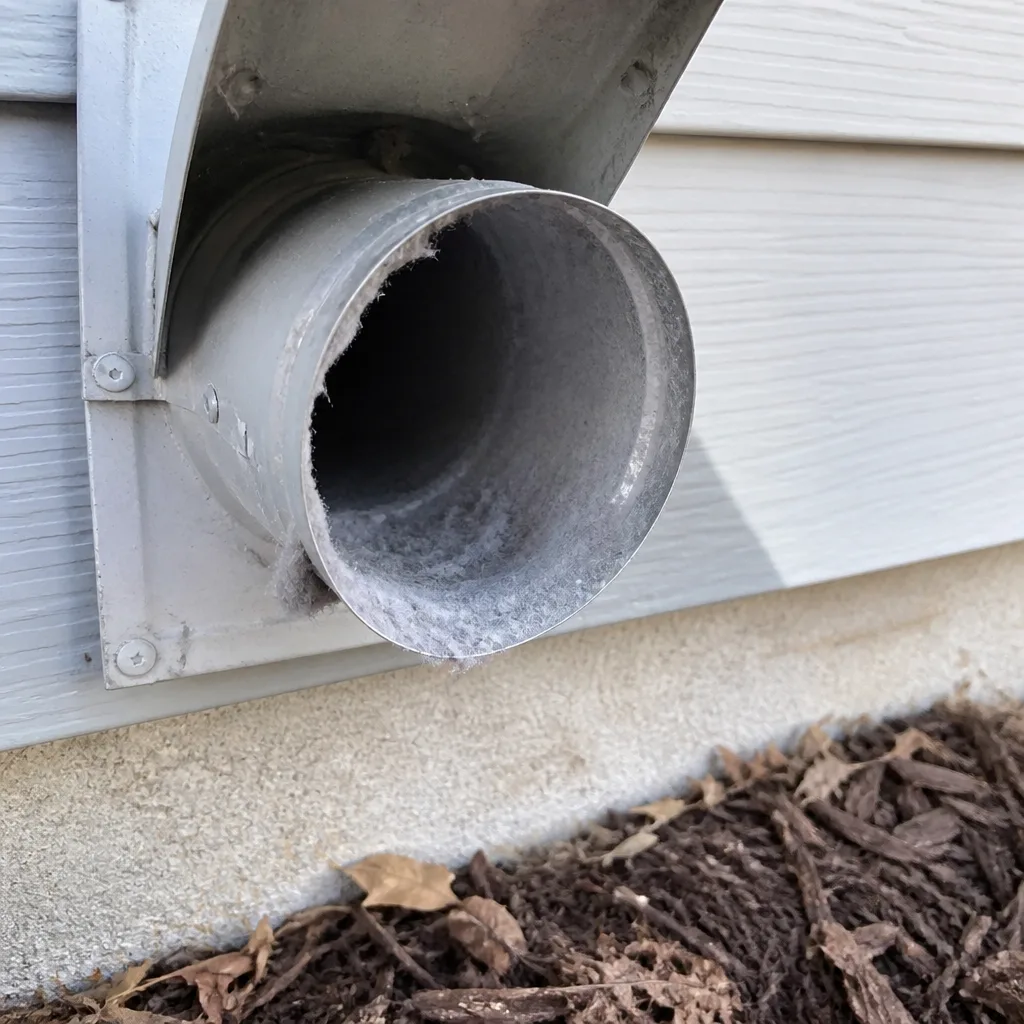 Dryer vent cleaning
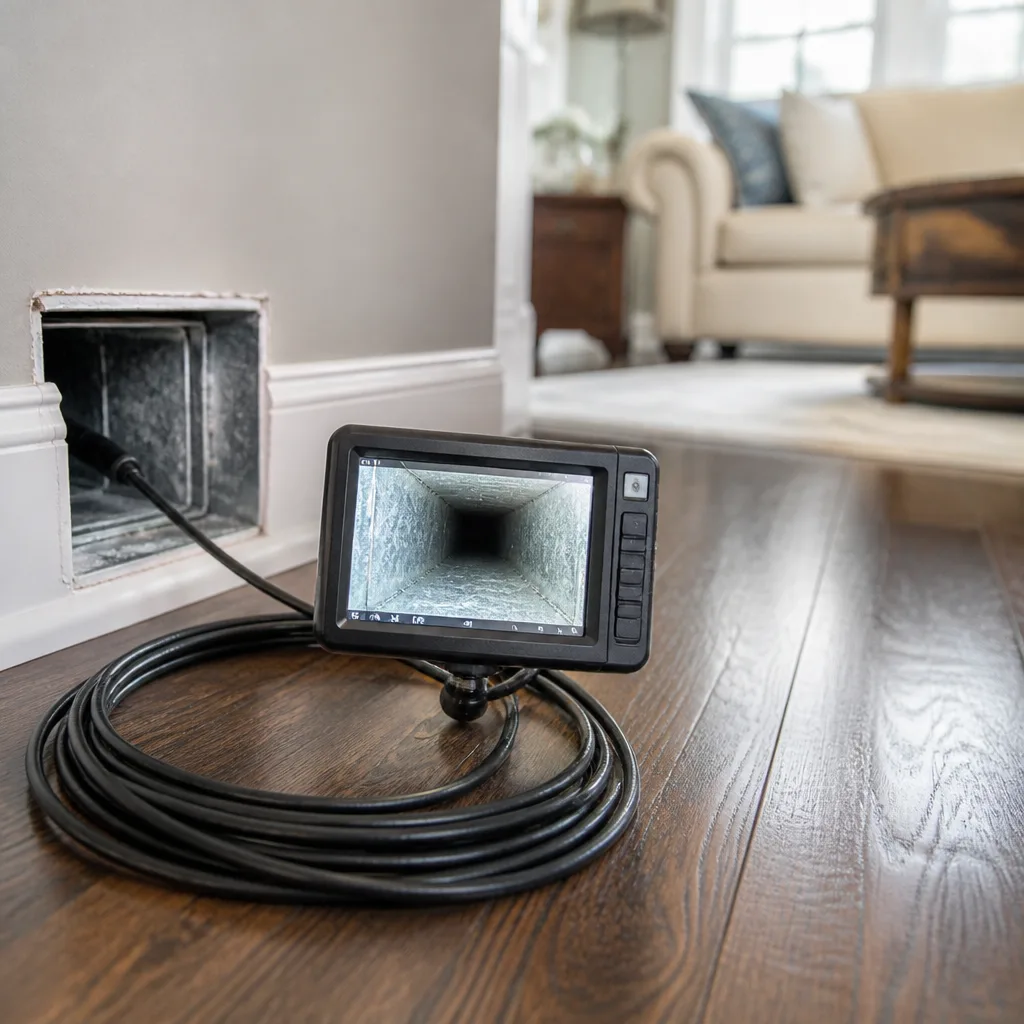 Camera inspection
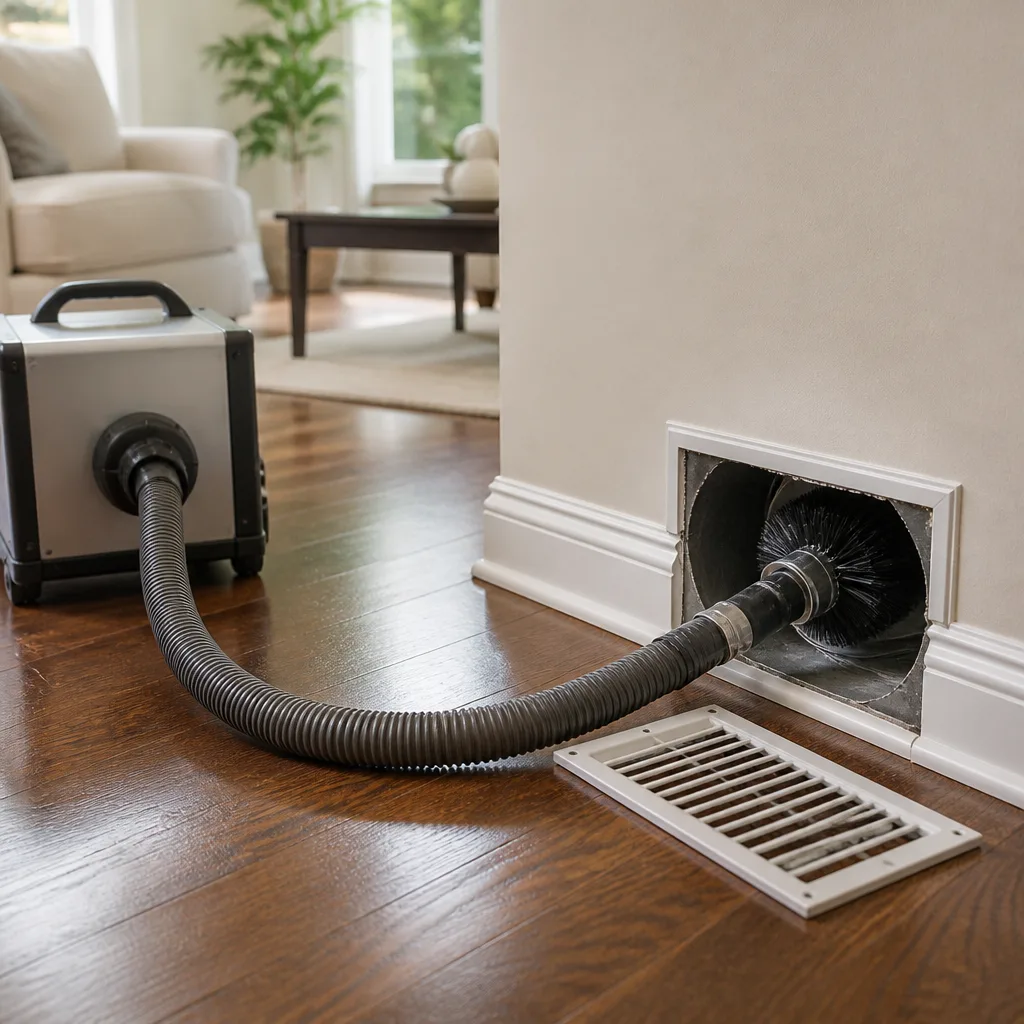 Sanitizing & deodorizing
Whole-system duct and dryer vent check with before-and-after photos - you see exactly what came out of your vents
That "$99 whole-house special" is a bait ad - the real number appears once they are in your hallway, or the "clean" is a shop-vac at the register. We photograph the inside of your ducts before and after instead.
Air Duct Cleaning Maintenance Checklist for Boulder Homeowners
A single Chinook wind event along the Front Range can push more fine particulate into your return-air grilles in 48 hours than three months of ordinary household activity. That’s the part most duct maintenance advice ignores. Generic checklists tell you to “clean your ducts once a year” and call it done, which makes no sense in a city where the air shifts with wildfire smoke in August, snowmelt humidity in March, and dry downslope gusts in January. Your ducts don’t experience the calendar the way a checklist assumes.
What follows is a maintenance routine built around how air actually moves through a Boulder home. You’ll get a pre-fire-season inspection list, a post-smoke-event escalation guide, a snowmelt checklist, and a log template that turns all of it into a real service interval instead of a guess.
Quick Answer
Boulder homeowners should inspect return-air grilles and change filters before fire season (May – June), escalate to a full duct inspection after any major wildfire smoke event that drives the Air Quality Index into unhealthy ranges, check ducts in unconditioned crawl spaces during snowmelt cycles, and schedule professional cleaning every two to three years – sooner if you have pets, allergies, or have been through a heavy smoke season. A maintenance log tracking filter dates, AQI events, and cleaning history tells you when the next service is actually due.
Styles & brands we work with
- Whole-home duct cleaning
- Dryer vent cleaning
- Camera inspection
- Sanitizing & deodorizing
Table of Contents
- Why a Boulder Seasonal Checklist Beats an Annual Reminder
- Pre-Fire-Season Checklist (May – June)
- After a Wildfire Smoke Event: When to Escalate
- Winter and Snowmelt: Condensation in Unconditioned Ducts
- What You Can Inspect Yourself vs. What Needs a Camera Scope
- The Dryer Vent Line on Your Maintenance Calendar
- Building Your Maintenance Log
- How Often Does Duct Cleaning Really Need to Happen?
Why a Boulder Seasonal Checklist Beats an Annual Reminder
Boulder sits against the Flatirons where the terrain funnels wind down the foothills and through the city. That geography means particulate loading in your air system doesn’t follow a smooth annual curve. It arrives in pulses: a dust event off the plains, a smoke plume from a fire west of the divide, a windy stretch in spring that lifts everything settled over winter. A checklist built around “once a year” misses those pulses entirely.
The seasonal structure here is not marketing. It reflects the actual sequence a Boulder home goes through:
- Late spring (May – June): The window before fire season. This is when you inspect for ash left from the prior year and confirm your filter is rated to capture smoke particles.
- Summer (July – September): Wildfire smoke events. This is when you decide whether a filter change is enough or whether the ducts themselves need attention.
- Winter and early spring (December – April): Snowmelt and condensation. Ducts running through unconditioned crawl spaces are the vulnerable spot.
- Year-round: Dryer vent checks and general register inspection, independent of outdoor air quality.
We’ve seen enough Boulder homes to know the pattern: the homeowners who get ahead of this are the ones who treat filter changes and duct inspections as responses to events, not as items on a fixed calendar. The rest of this guide walks through each season in detail.
Pre-Fire-Season Checklist (May – June)
Run this checklist before the first significant smoke event of the year, not after. Once a plume settles over Boulder, you’ve lost the window to prepare and you’re reacting instead. Two hours of inspection in late May or early June is worth more than a panicked call in August.
- Pull every return-air grille and look at the fins. Fine grey or black residue is ash carried in from a prior fire season. Gritty dust is ordinary household debris. The two look different, and the distinction tells you whether last year’s smoke reached your system.
- Check your filter’s MERV rating. Filters in the MERV 8 – 11 range capture the larger smoke particles and most household dust without overloading a residential blower. MERV 13 and above captures finer smoke particulate but restricts airflow on many older systems, so check what your equipment manual specifies before stepping up.
- Inspect the filter housing itself. A filter that fits loosely lets air bypass it entirely, which defeats the rating no matter what number is printed on the package. Gaps around the filter frame are common and easy to miss.
- Look at visible flex duct in the crawlspace. Any disconnected sections, crushed runs, or tape peeling at the joints mean unfiltered air is entering the system after the filter. That’s an air loss and contamination problem you’ll want sealed before smoke season.
- Note the condition of your registers throughout the house. Dust streaks radiating from a supply register suggest airflow issues or a leak nearby.
This is also the right moment to schedule air duct cleaning if your last service was more than two years ago. Getting the system clean in June means the filter you install in July is working against a clean baseline instead of a loaded one.
After a Wildfire Smoke Event: When to Escalate
Not every smoky afternoon in Boulder warrants a duct inspection. This is where a generic checklist fails hardest, because it gives you no threshold. Here’s a practical way to decide, based on how long and how intense the smoke event was.
Filter change territory
- AQI in the moderate-to-unhealthy-for-sensitive-groups range for a day or two.
- Smoke visible as haze but you never smell it inside the house.
- Windows and doors kept closed throughout.
In these cases, swap the filter once the air clears. A MERV-rated filter did its job and there’s no reason to look further.
Full inspection territory
- AQI in unhealthy or worse ranges during a Boulder County Red Flag event, sustained over multiple days.
- Smoke smell detectable inside the house even with windows closed.
- Visible ash on exterior surfaces, patio furniture, or window sills after the event.
- Dust trails or discoloration appearing at supply registers that weren’t there before.
- Occupants with asthma or allergies reporting symptoms worsening during and after the event.
When you hit most of that second list, a filter swap only handles what’s in the return airstream. Smoke particulate that made it past the filter and settled on duct surfaces doesn’t leave on its own, and the next heating cycle will lift it back into your rooms. This is the point where a camera inspection is worth the call. It’s also where our Abatement Technologies containment and negative-air setup earns its keep: during the inspection and any cleaning that follows, debris and disturbed particulate stay captured rather than redistributed through the home.
Winter and Snowmelt: Condensation in Unconditioned Ducts
This is the Boulder-specific problem that warm-climate duct guides never mention. When ducts run through an unconditioned crawlspace or attic, they’re exposed to temperature swings that the living space never sees. In Boulder, the sequence is predictable: a cold stretch, then snowmelt, then a week of warmer afternoons, then cold again. Each cycle pushes moisture into the air around those ducts.
Moisture plus dust inside a duct is a bad combination. It feeds biological growth and degrades the duct material itself. Warning signs to check for in late winter and early spring:
- Condensation on duct exteriors in the crawlspace. If the insulation jacket feels damp or you see water beads, the duct is losing its barrier.
- Rust or corrosion at metal joints and seams.
- Peeling or sagging insulation on flex duct runs. A compromised vapor barrier is the usual entry point for moisture.
- Sagging flex duct that sags between supports catches condensation and debris at the low point.
- Musty smell when the system first kicks on after a cold spell.
If you find any of those, the fix is usually not cleaning alone. It’s HVAC cleaning combined with duct repair and sealing: re-insulating the affected run, sealing the joints, and correcting the sag. Cleaning a duct that’s still losing its vapor barrier just resets the clock.
What You Can Inspect Yourself vs. What Needs a Camera Scope
Homeowners can catch a lot of problems with eyes and a flashlight. Knowing where that inspection ends is what protects you from both wasted money and missed issues.
Safe for you to check
- Return and supply register grilles. Remove, look behind, replace. Nothing inside a register housing requires special tools.
- Filter condition and fit. Check the rating, the seal around the frame, and how loaded the media is.
- Visible flex duct in the crawlspace. Look for disconnected sections, crushed runs, sagging, and peeling tape. Do not climb or move over ductwork, and stay out of crawlspaces that are wet, poorly lit, or full of loose insulation.
- Dryer vent exterior termination. Confirm the flap opens freely and that lint isn’t visible at the outside hood.
- Dryer vent interior at the appliance connection.
Needs a professional camera scope
- Deep interior duct conditions. Ash buildup, biological growth, and debris accumulation inside the duct run are invisible from a register.
- Hidden leaks and disconnected joints in duct runs you can’t see.
- Return-plenum conditions. A dusty plenum is a major particulate reservoir and one of the most commonly missed sources.
- Filter bypass at the air handler that’s hard to see from a filter access panel.
Anything involving the air handler, refrigerant lines, or gas components is not a homeowner inspection. We’ll say it plainly: work around gas-fired equipment and electrical components calls for a trained technician. Our technicians have up to 13 years of experience and use professional-grade Rotobrush and Nikro systems with HEPA-level filtration, so the inspection is done with purpose-built equipment rather than a shop vacuum and a hope.
The Dryer Vent Line on Your Maintenance Calendar
Dryer vents don’t care about fire season or snowmelt, but they belong on the same calendar because they’re the one air-safety item where the risk is acute rather than gradual. Lint accumulates at roughly a predictable rate and, in our experience, the buildup is fastest where the vent run is long, has multiple bends, or terminates through a roof rather than a sidewall. A Boulder home with a vent running up and out through an attic has more bends than a home venting straight through a wall.
- Check the exterior flap every month. If it doesn’t open smoothly when the dryer runs, air isn’t moving properly.
- Feel the exterior air while the dryer runs. Weak airflow at the hood or a hot dryer cabinet are warning signs.
- Look at the vent path. If you can see or reach the run, note how many bends it takes and whether it’s a long horizontal stretch. Bends are where lint collects.
- Schedule professional dryer vent cleaning annually, or more often if your household runs several loads per week. This is the item that runs on a true annual cycle regardless of outdoor air quality.
We don’t exaggerate this one. A clogged dryer vent is a fire risk, and it doesn’t announce itself. The lint you can see at the back of the dryer is a small fraction of what accumulates through the run.
Building Your Maintenance Log
Every maintenance guide in the world tells you to keep a log. Almost nobody does, because the “log” they hand you is a spreadsheet with no useful columns. The log worth keeping tracks decisions, not just dates. Here’s what we recommend: a simple document or notebook with these fields.
- Date of every filter change.
- Filter MERV rating installed.
- AQI event dates for major regional smoke events (Boulder County Red Flag days, unhealthy-range days from smoke). Even a rough note of “smoke week, late July” is enough.
- Visual observations from your seasonal inspection: register condition, any noticeable ash, any streaks, any musty smell.
- Professional service dates and what was done: cleaning, sealing, repair, sanitizing.
- Dryer vent cleaning date.
Why does this matter? Because when a technician asks “when was your last cleaning?” and the honest answer is “I think two or three years ago,” the service interval defaults to a guess. A log converts that guess into a data-driven decision. In a city where a single smoke event can push ash into a return grille in two days, the log is the difference between maintaining on conditions and maintaining on vibes.
If you’d rather hand the problem wholesale to a single provider, the full-system relationship is what we’re built for. Boulder Air Duct Cleaning Pros handles cleaning, repair and sealing, and sanitizing in one relationship, so the log stays in one place and nothing falls between specialists.
How Often Does Duct Cleaning Really Need to Happen?
There’s no single answer that fits every Boulder home, but there’s a defensible default: every two to three years for most households, sooner under specific conditions. The variables that move that number up or down:
- Pets in the home. Pet hair and dander load the return system quickly. Two years, often less.
- Allergies or asthma in the household. The margin for accumulating particulate is thinner. Lean toward the shorter end.
- A heavy smoke season. Any year with multiple unhealthy-range days from wildfire smoke counts against your interval. Plan the next cleaning within two years of a significant season.
- Recent renovation or remodeling. Drywall dust and construction debris will fill the system faster than normal use ever will. Inspect after the job.
- Known air loss or leaks. If the system is leaking, its cleaning interval is effectively never “done” until the duct repair and sealing is addressed.
- Continuous blower operation. Some households run the blower constantly. That circulates more air, which pushes more particulate through the system.
The practical rule: clean when your log tells you the system is loaded, and inspect once a year whether or not you clean. Dryer vent cleaning stays annual regardless. Duct sealing and repair, when needed, resets the interval – clean after you seal, not before.
Common Mistakes to Avoid
- Replacing the filter after the smoke event instead of before fire season. By the time the smoke has cleared, the particulate has already been through the system. Change to a fresh MERV-rated filter in May or June so it’s ready when the event arrives.
- Skipping the filter fit. A MERV 13 filter in a housing with gaps around the frame moves air the same way a cheap filter does: bypassed and unfiltered. Check the seal, not just the number.
- Ignoring the crawlspace until winter. Condensation damage in Boulder duct runs is easy to prevent in October and expensive to fix in April. A visual pass in the fall catches sagging runs and peeling vapor barriers before snowmelt season.
- Cleaning ducts before sealing them. If the system is leaking, cleaning first means you pay for a clean system that immediately re-contaminates through the leaks. Diagnose and seal first, then clean.
- Treating the dryer vent as an optional annual item. It isn’t. The lint load in a long, bent run builds steadily regardless of how the rest of your air system is doing.
- Assuming a recent renovation left the ducts clean. Drywall dust is finer than most filter media captures, and construction debris settles into registers, plenums, and return runs. Schedule an inspection after any significant remodel.
- Relying on a checklist with no log behind it. The date on a fixed annual reminder says nothing about the smoke event last August or the filter you swapped twice last spring. Log the events, not just the schedule.
See the difference
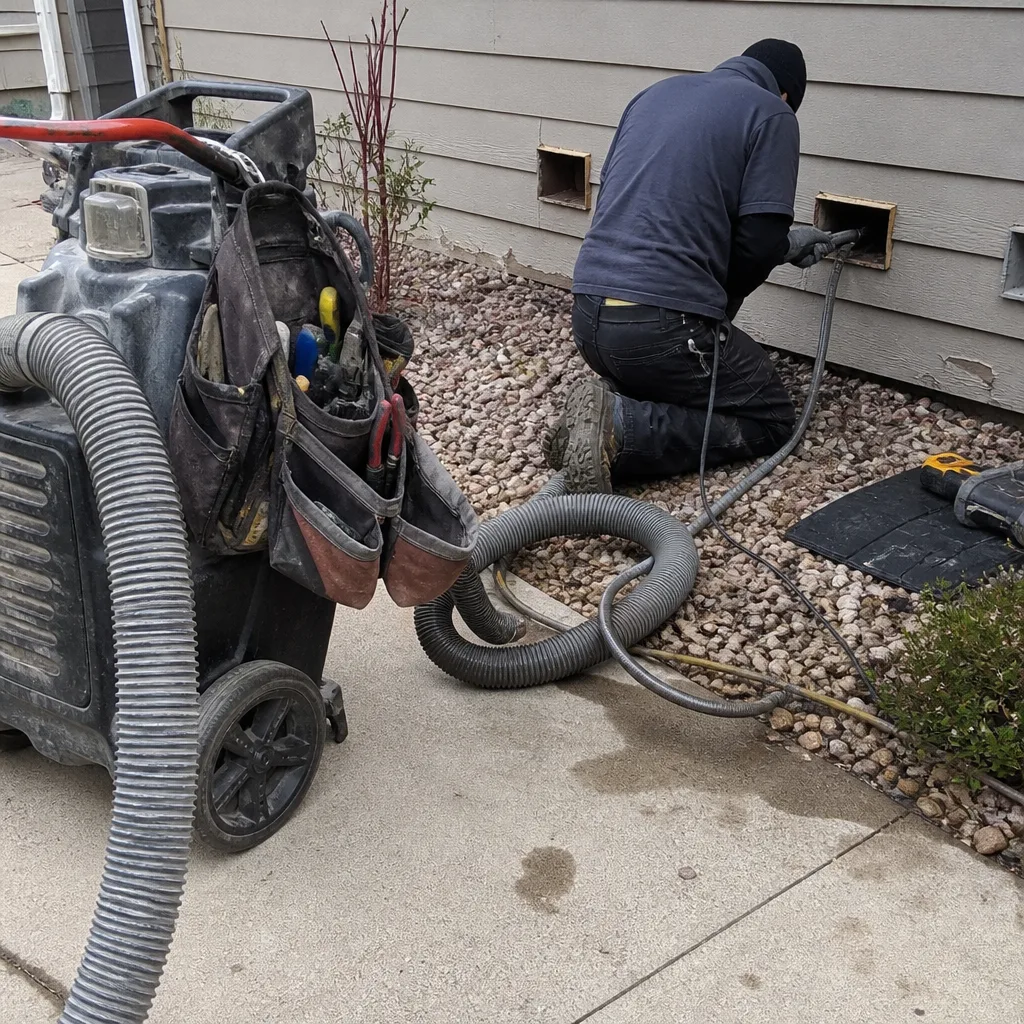 Before
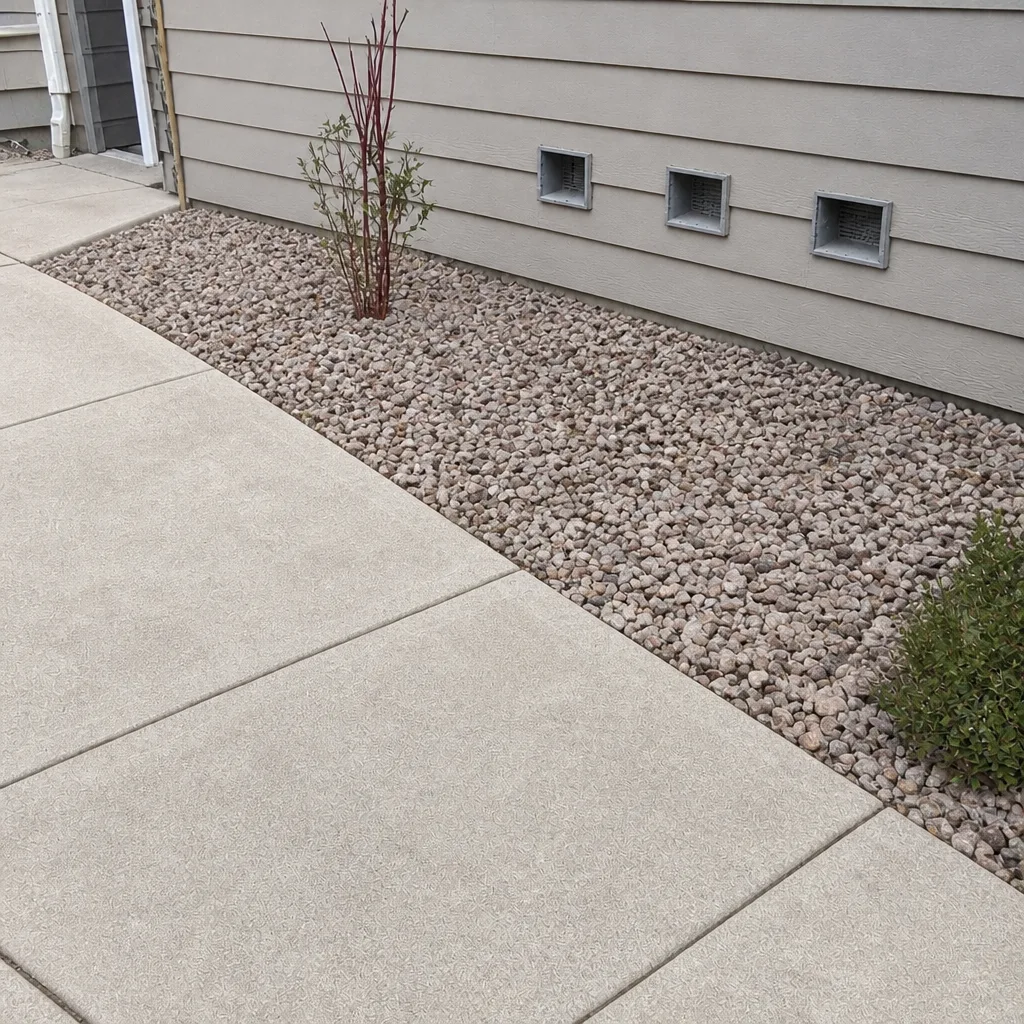 After
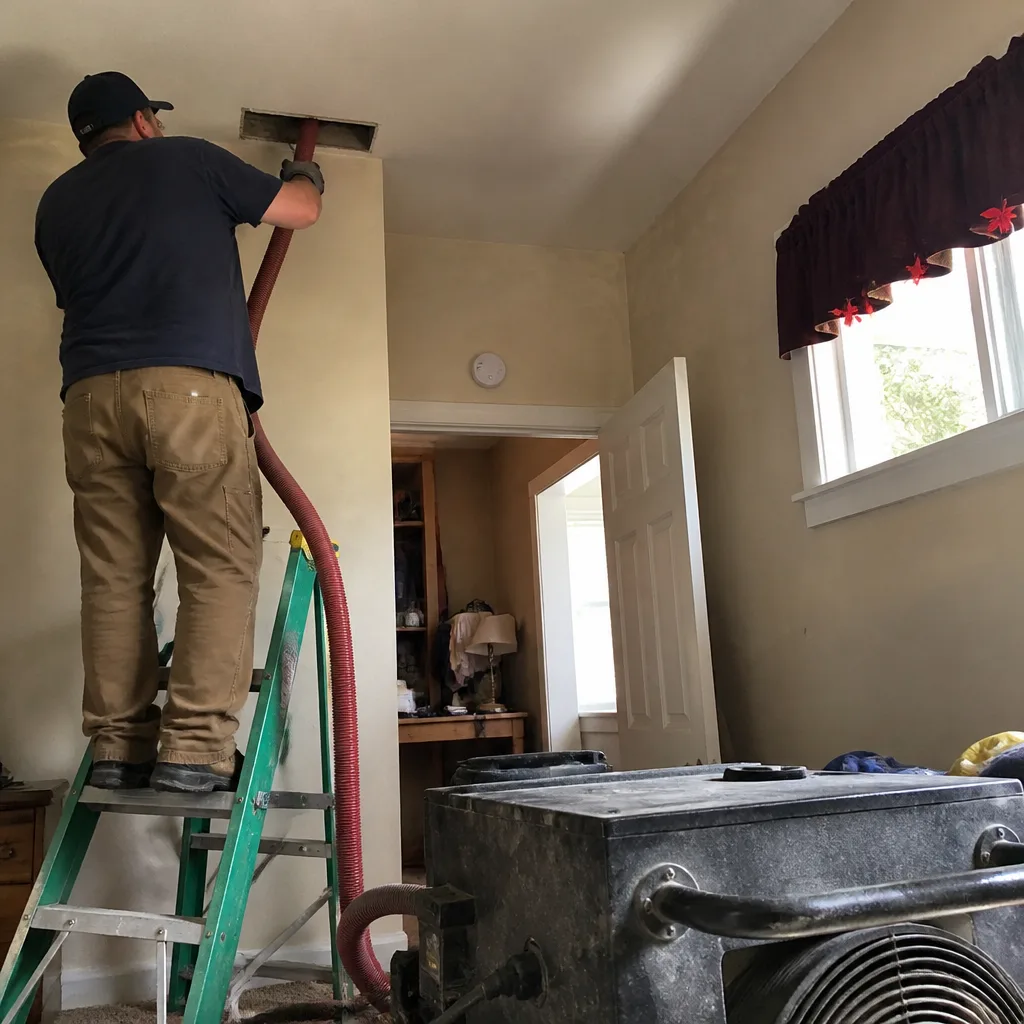 Before
 After
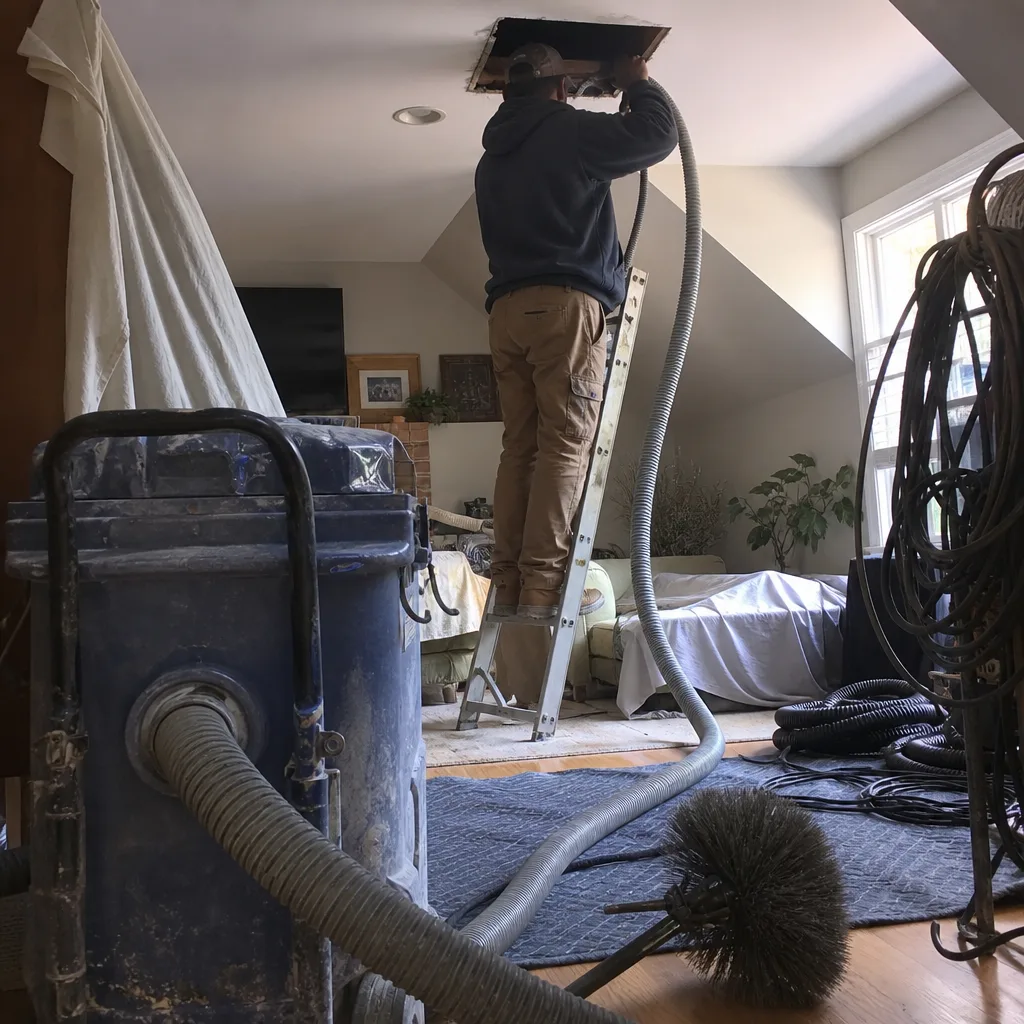 Before
 After
When to Call a Professional
Call a professional when any visual inspection turns up conditions you can’t resolve: visible ash inside a return after a heavy smoke event, musty smell from the system, visible damage to flex duct in the crawlspace, or repeated filter loading faster than expected. Call if your household has asthma or allergy challenges and you’re unsure what the current system is doing. Call after a substantial renovation. And call if it’s simply been more than two years and you have no service history to guide you.
Boulder Air Duct Cleaning Pros offers free estimates in Boulder – call (833) 554-4046. Our technicians have up to 13 years of experience and use professional-grade Nikro and Rotobrush equipment with HEPA-level filtration to give you a clear answer about what your system needs. Written estimates are set per job before work starts, and we can work with your insurer if a claim is involved. Call (833) 554-4046. We answer 24/7. Fast dispatch from 7am to 7pm, Sunday through Friday.
Frequently Asked Questions
Every two to three years for most Boulder homes, with the interval shortened by pets, allergies, recent renovations, or a heavy wildfire smoke season. Dryer vent cleaning runs annually regardless. A maintenance log that tracks filter dates and smoke events gives you a specific interval instead of a generic one. Call (833) 554-4046 for an exact quote – estimates are free.
Only if the smoke was severe enough to matter. A day or two of unhealthy-for-sensitive-groups air usually calls for a filter change. A multi-day Boulder County Red Flag event with unhealthy AQI, smoke smell inside the home, or visible ash on surfaces is a reason to schedule an inspection. When in doubt, a camera scope settles it. Call (833) 554-4046 for an exact quote – estimates are free.
MERV 8 to 11 is the practical range for most Boulder homes because it captures smoke particles and household dust without overloading the blower. MERV 13 captures finer particulate but restricts airflow on some older systems. Check your equipment manual before stepping up, and confirm the filter fits its housing snugly so air can’t bypass it. Call (833) 554-4046 for an exact quote – estimates are free.
A whole-system clean is quoted per job after an inspection, not per vent and not from a teaser coupon. The written estimate sets the final price, and a lot of low advertised numbers become a much larger invoice once the technician is on site. Ask for a per-system figure in writing before work starts. Call (833) 554-4046 for an exact quote – estimates are free.
Cheap quotes usually cover one pass through the visible registers with a shop vacuum and a promise that the rest was handled. Real duct cleaning needs HEPA-level filtration and containment, so debris isn’t redistributed into your rooms. Our standard is Abatement Technologies containment and negative-air equipment for exactly that reason. Ask what equipment a quote includes before you compare prices. Call (833) 554-4046 for an exact quote – estimates are free.
Ask for before-and-after photos of your own ducts and registers. That’s the simplest way to see what the crew found and what they removed, without relying on a checklist they hand you at the end. A written report with photos is the baseline. Call (833) 554-4046 for an exact quote – estimates are free.
The Bottom Line
Duct maintenance in Boulder isn’t a once-a-year checkbox. It’s a seasonal rhythm: inspect and prep before fire season, decide on escalation after smoke events using AQI thresholds, check for condensation during snowmelt cycles, and keep the dryer vent on a firm annual schedule. Do the visual checks you can safely handle, use a camera scope for what you can’t see, and log the dates and findings so the next service interval is a decision instead of a guess. When the system calls for professional attention, we’ll bring Rotobrush and Nikro equipment with HEPA-level filtration and give you a clear written estimate for exactly what your home needs.
Written by the team at Boulder Air Duct Cleaning Pros.